Skills vs. Degrees: What Employers Are Really Looking For
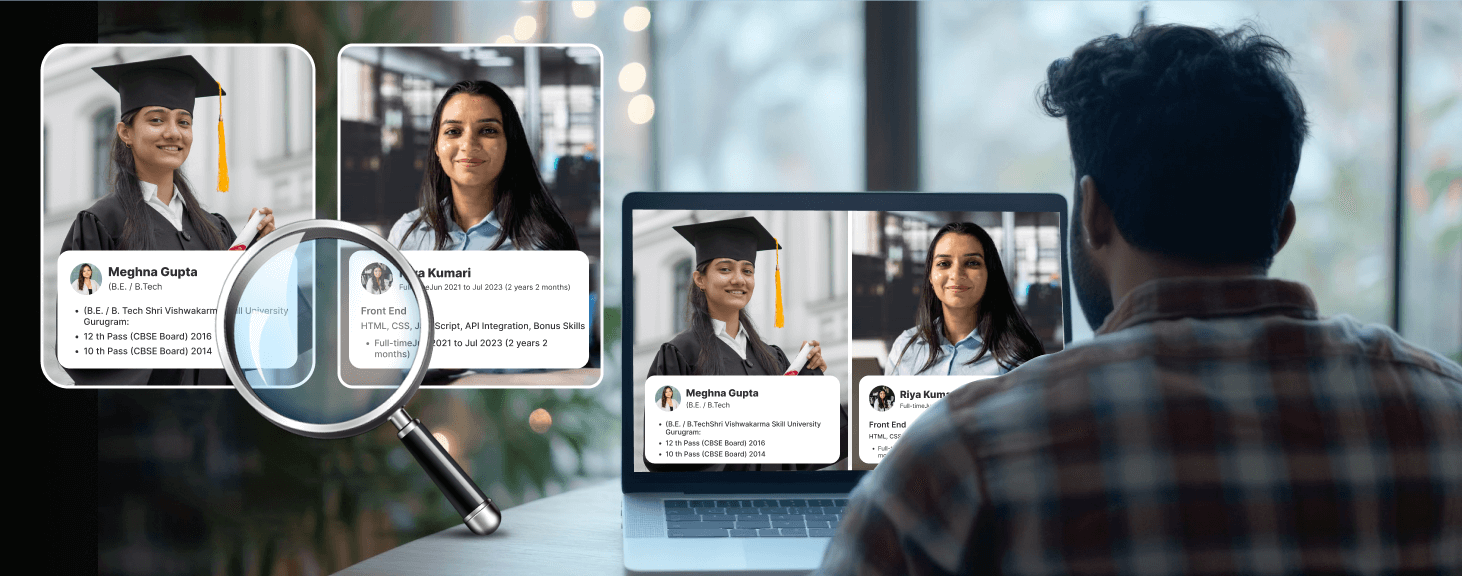
For years, job seekers believed that earning a degree was the ultimate ticket to career success. A strong academic background was considered the baseline requirement for most jobs. But the hiring landscape has changed drastically. Today, employers are no longer evaluating candidates only based on what they studied—they’re focusing on what candidates can actually do.
Thanks to the global demand for talent, rapid technology adoption and the rise of AI-driven recruitment tools, skills are now becoming the new currency of hiring. Degrees still hold value, but they aren't the whole story anymore. So what matters most in 2025? And how can candidates position themselves better?
Let’s break it down.
The Shift: Why Skills Are Gaining Power
Employers have realized something important:degrees don’t always reflect real-world ability.
A candidate may hold a bachelor’s degree but still lack the practical skills required to do the job. On the other hand, someone with strong hands-on experience or certifications may outperform degree-holders.
Three key reasons for this shift:
1. The speed of industry evolution
Technology evolves faster than most academic programs. What you learn in a 3-year course can become outdated by graduation. Employers now prefer candidates who demonstrate adaptability and continued learning.
2. Rise of skill-based hiring platforms
AI-driven systems like vhAIre evaluate candidates based on competencies, not just formal qualifications. This levels the playing field for candidates from diverse educational backgrounds.
3. Practical impact over theoretical knowledge
Companies want employees who can contribute from day one. Demonstrated skills are often a better predictor of job performance than academic degrees alone.
Do Degrees Still Matter? Absolutely — But Differently
Let’s be clear: degrees haven’t become irrelevant.
They still matter for roles that require:
- Technical depth (engineering, medical, legal, finance)
- Regulatory qualifications
- Foundational knowledge
- Strategic or leadership understanding
Degrees often serve as:
- Evidence of commitment
- A baseline competence indicator
- A filter for certain industries
But they are no longer the final or biggest deciding factor.
Employers now see degrees as one piece of the puzzle, not the entire puzzle.
What Today’s Employers Actually Look For
1. Practical Job Skills (Hard Skills)
These are the skills needed to perform daily job tasks.
Examples include:
- Coding languages
- Sales pipelines
- Graphic design tools
- Data analysis
- Digital marketing
- Project management
- Customer communication
- Industry-specific tools (CRM, ERP, etc.)
Candidates who can prove these skills—through projects, portfolios, certifications and interview performance—stand out immediately.
2. Adaptability and Learning Agility
Companies value candidates who can grow with the role.
Examples:
- Picking up new tools quickly
- Reskilling when needed
- Showing curiosity about industry changes
- Staying updated with market trends
Employers love candidates who can learn faster than problems evolve.
3. Soft Skills and Behavioral Competencies
This includes interpersonal and professional qualities such as:
- Communication
- Teamwork
- Time management
- Critical thinking
- Accountability
- Problem-solving
These qualities often determine long-term success more than technical ability.
4. Experience & Portfolio Evidence
Experience doesn’t always mean years in a job. It can also mean:
- Internships
- Freelance work
- Volunteer projects
- Personal creative or technical projects
- Hackathons
- Bootcamp assignments
These demonstrate hands-on capability far more than academic transcripts.
5. Certifications & Micro-Credentials
In the era of upskilling, small certifications carry huge weight.
Employers love seeing:
- Relevant short courses
- Tools-based certifications
- Skill badges
- Online learning achievements
They prove commitment, initiative, and modern competence.
How Candidates Can Position Themselves in 2025
Here’s how to stand out—regardless of your degree background.
1. Build a Strong Skill Portfolio
Don’t just list skills—show evidence.
Include:
- Projects
- Screenshots
- GitHub repositories
- Case studies
- Campaign links
- Videos or design samples
Your portfolio should be your strongest weapon.
2. Keep Learning — Continuously
Small, targeted certifications can:
- Boost credibility
- Fill skill gaps
- Align you with current employer needs
Platforms like Coursera, Udemy, Skillshare, Google Career Certificates, and LinkedIn Learning are now considered mainstream and respected.
3. Tailor Your Profile for Each Application
Customize your vhAIre profile, resume and job applications based on:
- Required skills
- Keywords
- Tools listed
- Behavioral expectations
Tailored profiles perform better in AI-driven systems.
4. Highlight Transferable Skills
Even if your degree is unrelated, transferable skills can make you a strong fit.
Examples:
- Communication
- Leadership
- Customer-facing experience
- Analysis skills
- Creativity
- Problem-solving
These apply across industries.
5. Prepare for Skill-Based Assessments & AI Interviews
Companies increasingly use:
- Skills assessments
- Scenario-based questions
- AI conversational interviews
To succeed:
- Prepare examples from your past
- Use the STAR method
- Practice clarity and structure
- Demonstrate thinking, not memorization
How vhAIre Levels the Playing Field for Candidates
vhAIre’s platform evaluates candidates based on skills, confidence, communication style, and role alignment—not just academic background.
This means you can stand out by:
- Showcasing your strengths
- Completing on-demand interviews
- Highlighting your skills with clarity
- Uploading certifications and projects
vhAIre empowers candidates from all types of backgrounds—degree or not.
Conclusion: Skills Are the New Competitive Advantage
A degree can open the door, but skills help you walk through it.
In today’s hiring world:
- Skills demonstrate competence
- Projects show proof
- Certifications show initiative
- Adaptability shows long-term potential
Whether you’re a fresh graduate, a career switcher or an experienced professional—your skills, effort and continuous learning matter more now than ever.
If you use them right, your degree becomes a supporting asset—not the only one.
Recent Blogs
How AI Is Transforming Candidate Experience
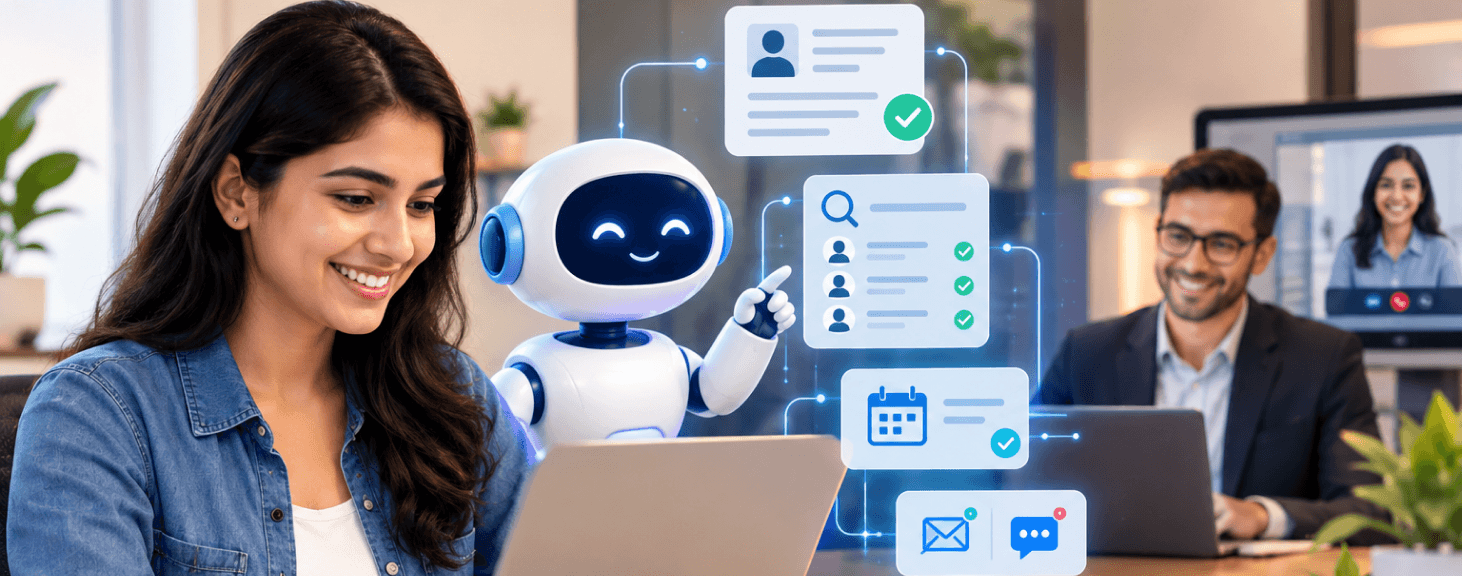
The candidate experience has become an increasingly important part of modern recruitment. As organizations compete for skilled professionals, the hiring process is no longer viewed simply as a way to fill open positions. Every interaction a candidate has with an organization—from submitting an application to completing interviews and receiving updates—can influence how they perceive the employer. A complicated, slow, or inconsistent hiring process can cause qualified candidates to disengage, while a structured and responsive experience can strengthen employer reputation and improve hiring outcomes.
Read More
The Role of Resume Optimization in AI-Driven Hiring
The hiring process has evolved significantly over the past few years. What was once a recruiter-driven process supported primarily by manual resume reviews and face-to-face interviews has become increasingly technology-enabled. Organizations are adopting artificial intelligence to manage growing application volumes, accelerate hiring decisions, and improve recruitment consistency. As a result, the resume has taken on an even more important role in the hiring journey.
Read More
AI Interviews: Redefining Candidate Evaluation in Modern Hiring
The hiring landscape is undergoing a significant transformation as artificial intelligence becomes an increasingly important part of recruitment processes. Organizations across industries are adopting intelligent technologies to streamline hiring, improve efficiency, and make more informed decisions. Among these innovations, AI interviews have emerged as one of the most influential developments, changing how candidates are evaluated and how hiring teams identify the right talent.
Read More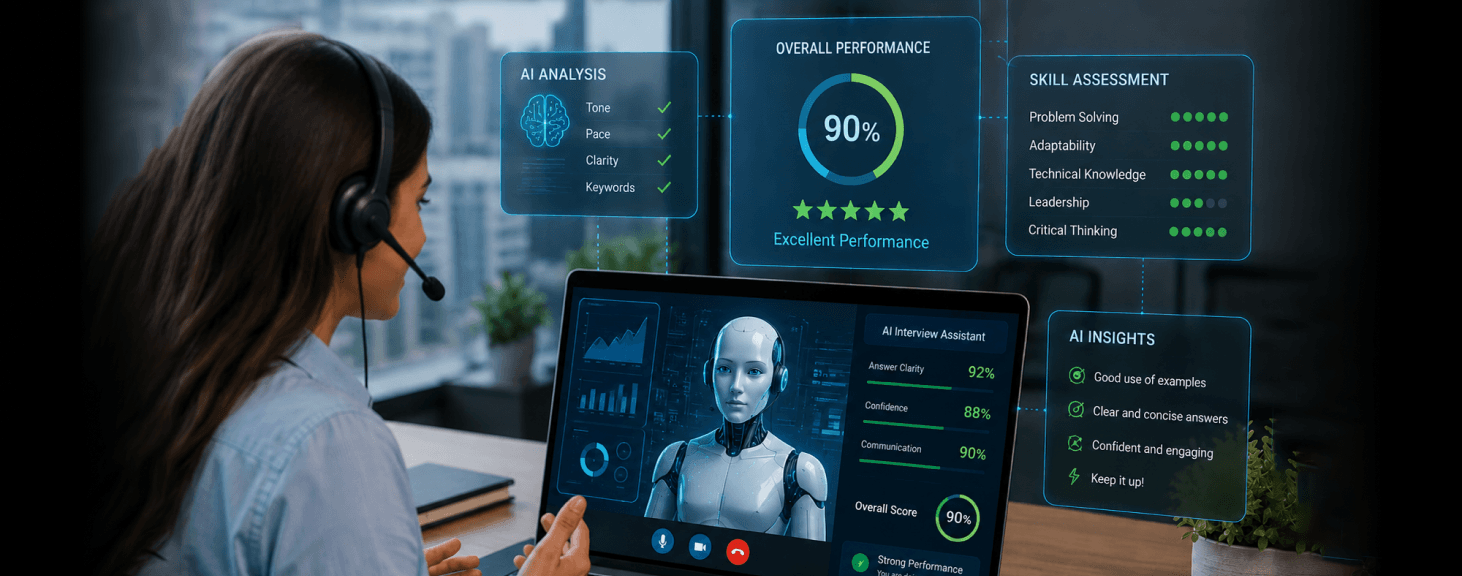
Interview Preparation Strategies for AI-Driven Hiring
The recruitment landscape is evolving rapidly as organizations adopt artificial intelligence to streamline hiring operations and improve decision-making. From resume screening and interview scheduling to candidate evaluation and communication, AI-driven hiring processes are transforming how companies identify and engage talent. For candidates, this shift has created a new interview environment where preparation requires more than just technical knowledge and confidence. Understanding how AI-driven hiring works has become equally important.
Read More
Streamlining the Candidate Journey with AI-Powered Hiring
The candidate journey has become a defining factor in modern recruitment. In a competitive talent landscape, candidates expect speed, transparency, and consistency at every stage of the hiring process. However, traditional recruitment workflows often fall short, creating friction through delayed responses, manual screening, and inconsistent interview experiences.
Read More
From Application to Offer: How Candidates Can Take Control of Their Journey in 2025
Landing a job in 2025 looks very different than it did just a few years ago. Artificial Intelligence (AI), digital hiring platforms, and evolving workplace expectations are reshaping the candidate experience. But while the process may feel overwhelming, the truth is this: candidates have more control over their journey than ever before. From crafting the right application to negotiating an offer, every step is an opportunity to stand out. Here’s how you can take control of your career journey from application to offer in an AI-driven world.
Read More
The Power of Continuous Learning: How Small Certifications Can Make a Big Impact
In today’s job market, learning doesn’t end with a degree. Employers are increasingly looking for candidates who show they can keep pace with change and one of the best ways to prove that is through continuous learning. The good news? You don’t need another four-year degree to impress recruiters. Small certifications and micro-credentials can make a big impact by showing adaptability, curiosity, and commitment to growth. In fact, these signals often make the difference between getting noticed or overlooked in an AI-driven hiring world.
Read More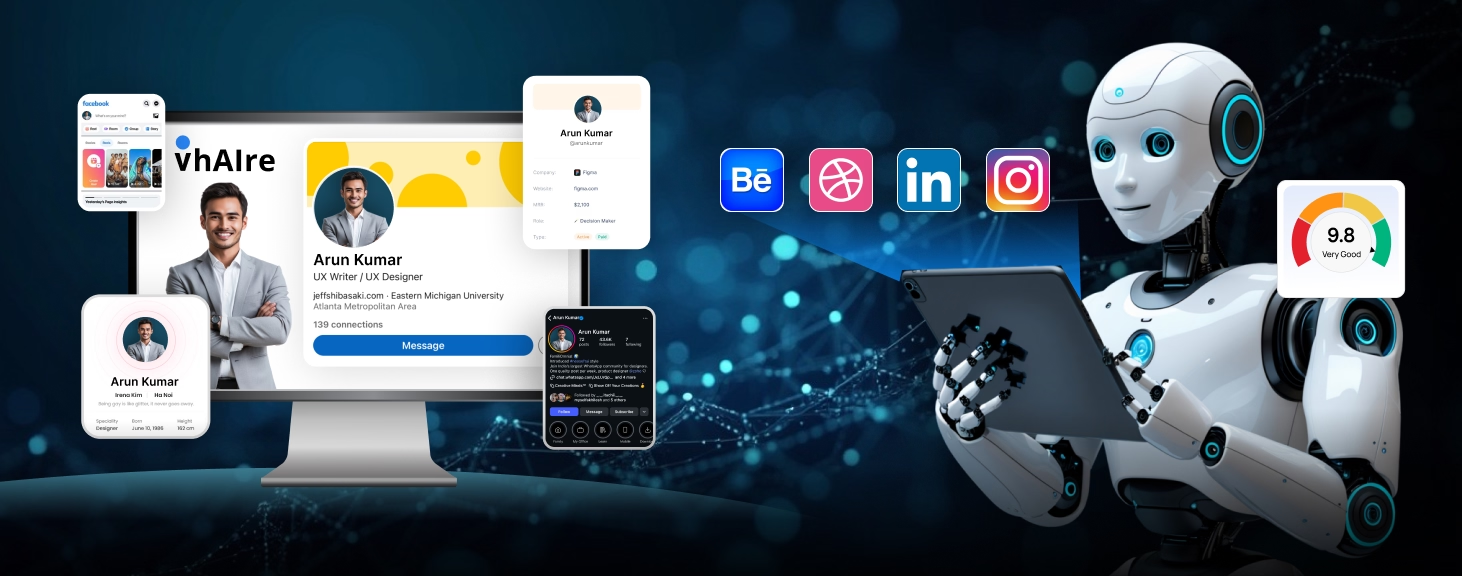
Your Digital Footprint Matters: What AI Recruiters See Before Meeting You
In today’s hiring landscape, your resume isn’t the only thing recruiters see. Before they ever speak to you, Artificial Intelligence (AI) systems and the recruiters who rely on them are already scanning your digital footprint. Your LinkedIn activity, online portfolios, certifications and even the way you present yourself on social platforms can all influence how you’re perceived. In fact, your digital presence has become your first impression often before you get a chance to speak for yourself. So what exactly do AI recruiters see—and how can you take control of the narrative?
Read More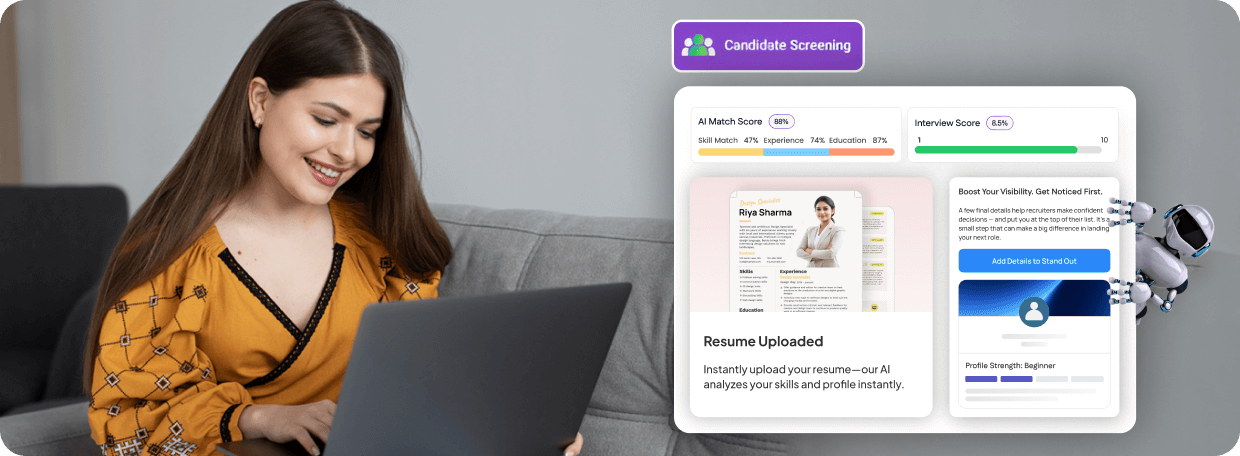
How AI Is Changing the Job Hunt—And How You Can Stay Ahead
Artificial Intelligence (AI) has revolutionized industries ranging from healthcare to finance—but one area where its impact is often underestimated is recruitment. For candidates, the hiring process now looks vastly different compared to even five years ago. From AI-driven resume screeners to predictive candidate matching and automated interview prep tools, AI is quietly shaping the job hunt at every stage. So, what does this mean for you as a candidate? And how can you adapt to not just survive—but thrive—in this AI-powered hiring era?
Read More